

Optimum Research Consulting has been helping PhD students with their Topic Selection since 2018. Our firm is based on the principles of integrity and trust which benefits everyone.
When looking at the overall dissertation process – most important stage is undeniably the Topic Selection. It is the foundation for everything that follows. It is also the part of the process where experience matters the most given the incredible variety of domains one needs to draw from.
Success will naturally flow given a proper Topic Selection. Even a slightly poor choice can branch into multiple delays or issues. Feedback from school resources often lacks the clarify of our mission – to help your process proceed as smoothly as possible.
Topic Selection
Selecting a research topic and developing the foundation of doctoral research study is challenging! It has many boxes to check: It must be relevant to your field of study, original (not previously explored in the same way), aligned with your committee’s expectations, and matched with a methodology fitting your access to data. In this way, the topic development process can be both exciting and intimidating at the same time. At Optimum Research Consulting, our dissertation consultants are ready to nurture your excitement by working with you to select a topic that you are passionate about and that will contribute to the body of knowledge in your field of study. Our expert dissertation coaches can also help relieve the anxiety that often comes with this step. We do this through our extensive experience which will help you avoid what we call the Common Pitfalls of Topic Selection.
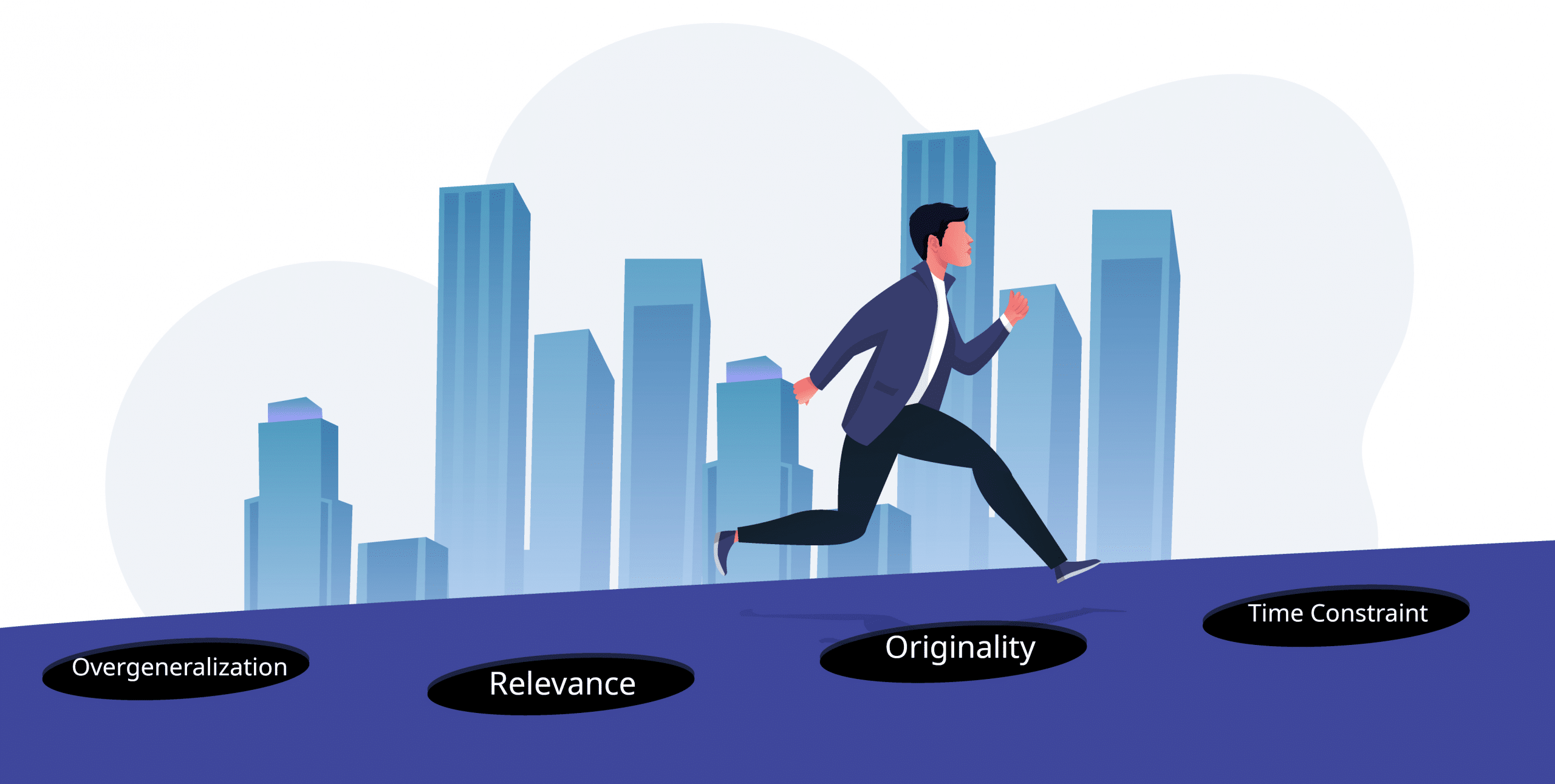
Common Pitfalls of Topic Selection include:
- To narrow: The topic chosen might be too specific, making it difficult to find enough research and information to support the need for the study (i.e., the research gap).
- Overgeneralization: The topic might be too broad, making it challenging to focus and define the study’s scope and objectives.
- Relevance: The topic might not align with your research interests or your program or specialization, making it hard to maintain motivation and focus.
- Originality: The topic might have been widely researched, making it impossible to find a current and significant research gap to address.
- Availability of time and resources: The topic might wind up too time-consuming, or require data or resources that are difficult or impossible to access, creating a roadblock when you reach the methods development stage.
Given these pitfalls, it’s crucial to choose a topic that is relevant, feasible, and manageable, while still being interesting and challenging. It’s a lot to do all at once!
Given these pitfalls, it is crucial to choose a topic that is relevant, feasible, and manageable. It is a challenge to do all at once. This is why reaching out to a Topic Selection Expert is of utmost value at the earlier stages of your dissertation. The small investment of time talking to an advisor from Optimum will reap outsized rewards!
Let’s break down the common pitfalls of topic selection so you understand the issues you are facing.
Even if you don’t speak with one of our Topic Selection Experts, do yourself a favor and be aware of the potential pitfalls. Proper Topic Selection assures your dissertation process will proceed with as few roadblocks as possible.
Problem 1 – Too Narrow
If a dissertation topic is too narrow, it can create several challenges for the researcher:
- Limited research: There may not be enough research available on a narrow topic, making it challenging to gather sufficient evidence to support the study. In other words, it works better when there is a gap not a chasm!
- Lack of significance: A narrow topic might not be significant enough to make a meaningful contribution to the field, making it challenging to convince others of the study’s value.
- Narrow audience: A narrow topic may only be of interest to a small and specific audience, making it challenging to disseminate the findings and make a broader impact. A lack of external validity or transferability can sink a study!
- Lack of relevance: A narrow topic might not be relevant to current problems, making it less valuable and important to others.
- Lack of originality: A narrow topic may have been extensively researched, creating difficulty in finding new and original contributions to make.
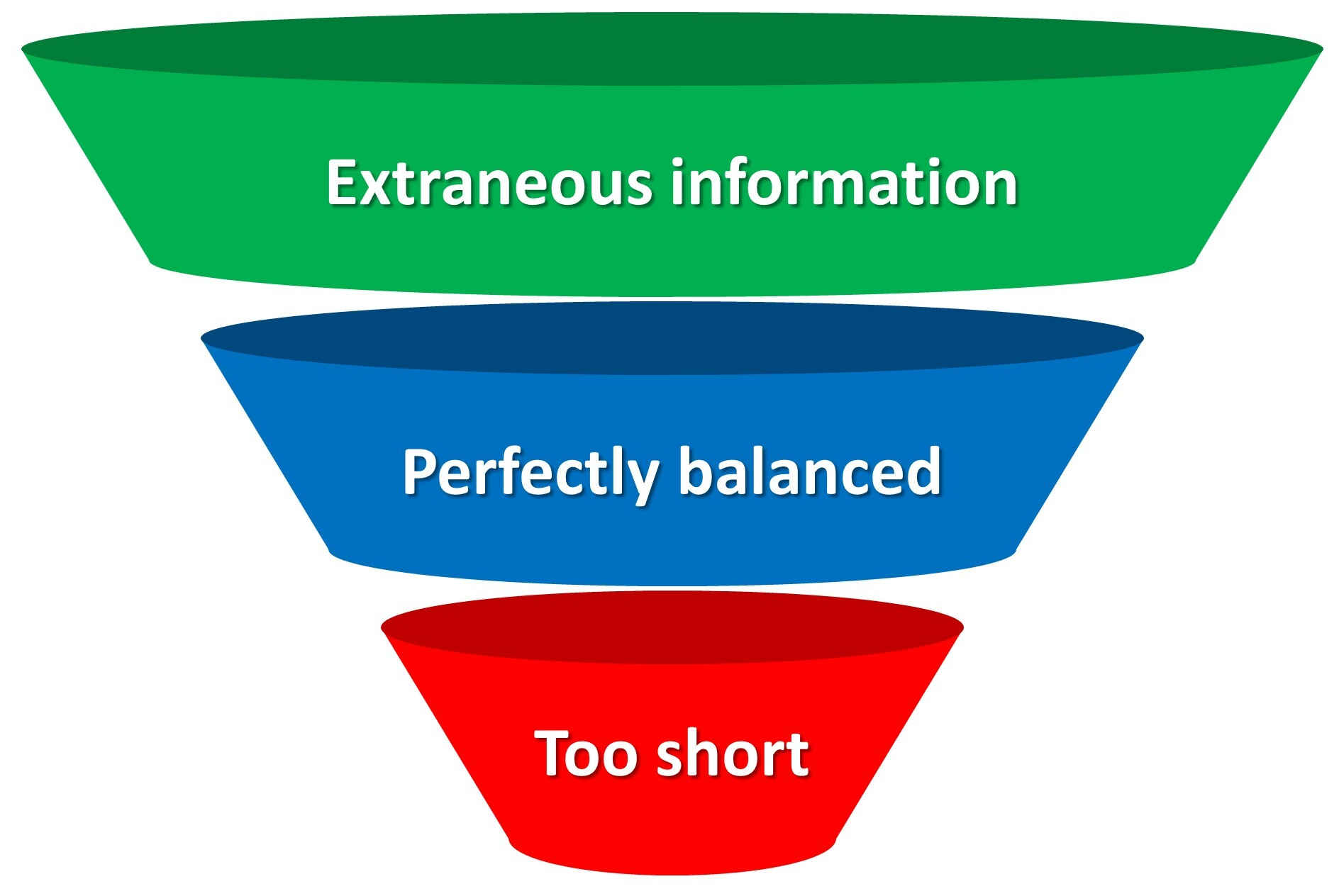
Problem 2 – Over Generalizing
If the topic selected for a dissertation is too general, it can also lead to several problems:
- Lack of specificity: Overgeneralizing can lead to a lack of specificity in your research, making it difficult to clearly define your research questions and hypotheses.
- Inadequate data: Overgeneralizing can lead to collecting and analyzing data that are too broad, making it difficult to draw meaningful conclusions and make valid inferences.
- Inaccurate conclusions: Overgeneralizing can result in inaccurate or unsupported conclusions, as the data may not accurately represent the population or phenomenon being studied. This is a problem with internal validity.
- Lack of rigor: Overgeneralizing can weaken the rigor of your research because it may not be possible to properly control for extraneous variables or account for potential confounding factors.
Bottom line – it is important to find a balance between too narrow and too broad. A single simple phone call with a Topic Selection Expert can help you validate your current research questions and get you on the right path. While the process can seem deceptively straightforward – the reality is that understanding the full context with all the corresponding issues requires exceptional experience to safely navigate.
Your topic determines everything -
We can also help you avoid other common pitfalls of Topic Selection. Any one of these potential problems could cause issues as you wade through your school’s system. Many chairs and committees are under pressure to keep you enrolled for the school to receive revenue.
Before you finalize your topic, make sure you consider relevance, originality, and available resources.
Problem 3 – Relevance
A dissertation topic that is not relevant to your field of study may lead to problems:
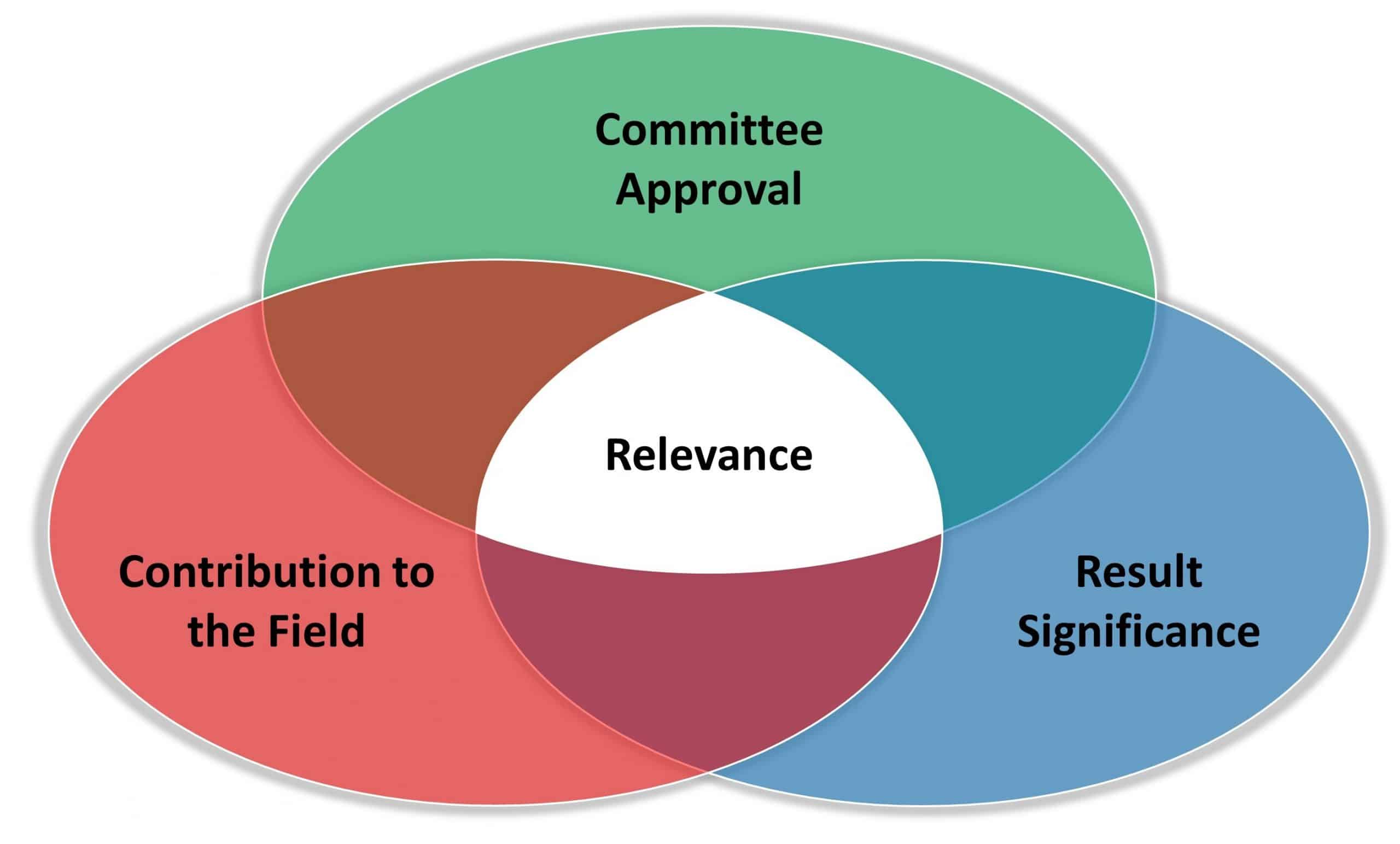
- Lack of committee approval: If the selected topic is not relevant to your degree program, you may not gain approval from your committee. As a result, you will need to start all over—however far along you are in the process!
- Lack of contribution to the field: A topic that is not relevant to your field of study will have limited scientific contributions to the scholarly body of knowledge within your field.
- Difficulty justifying the significance of results: It will be difficult to justify the practical significance of the results if your topic is not relevant to your field of practice.
Optimum’s experienced consultants seen doctoral candidates get stuck for all these reasons. While it is common to hit a roadblock right away, in the form of failure to get approval for a topic, candidates often reach a later stage before a committee member notices issues. This means you may have traveled a long way and now have to start over. Optimum Consultants provide help from the start. Optimum Consultants can help you plan your research, determine methodology, and assess other important considerations to ensure you never get stuck.
Problem 4 – Originality
When choosing a dissertation topic, you may face several challenges related to originality:

- Overcrowded research areas: Some research areas may already be saturated with numerous studies, making it difficult to carve out a research gap to address.
- Lack of creativity: It can be a struggle with coming up with unique ideas or finding a new angle on a well-researched topic.
- Limited access to resources: It’s challenging to conduct original research if you have limited access to data. This is a critical issue–one that is often overlooked during the initial topic selection process!
- Fear of originality: It’s common to avoid choosing an original topic for fear that it may not be well-received or may not meet academic standards.
- Pressure to conform to expectations: There is a lot of pressure in academia, and you might feel the need to conform to expectations and choose a topic that is deemed acceptable by your advisor or department, rather than one that truly interests you.

Problem 5 – Lack of Resources and Time
There are several factors that can cause time constraints when writing a dissertation:
- Overcrowded research areas: Some research areas may already be saturated with numerous studies, making it difficult to carve out a research gap to address.
- Lack of creativity: It can be a struggle to come up with unique ideas or to find a new angle on well-researched topics.
- Limited access to resources: It’s challenging to conduct original research if you have limited access to data.
- Life events: Life happens, and personal or family emergencies can take up time and energy.
- Research challenges: Research may involve overcoming various unexpected challenges, such as issues with recruitment, data collection, and analysis.
Thankfully, there are best practices that, when applied carefully, can help you avoid all of these common pitfalls. While thoroughly understanding the research and identifying areas where original research can be conducted, it is possible to find a gap in the literature. For instance, scouring the limitations and recommendations sections in existing research can help you identify areas where original research is needed. With Optimum, you will not find more experienced mentors to help you get started correctly.
Through our vast experience, we’ve developed a process that allows candidates to avoid common pitfalls during the gap-finding process and all the steps to follow, resulting in a solid foundation for a rigorous qualitative or quantitative study:
- Conduct a thorough review of existing literature in the field to identify the gap. Oftentimes, students can find a gap in the literature by reviewing the limitations or recommendations for future research.
- Develop the problem statement, starting with a clear, demonstrable social or practice problem and ending with the identified research gap.
- Construct the purpose statement using a template like this one: “The purpose of this [method] [design] study is to explore (qualitative)/examine (quantitative) [research gap].”
- Develop the research questions by dividing the purpose into its component parts and making them interrogative.
Of course, most candidates must develop more than this foundation at the start of the dissertation process. Other elements include the theoretical framework, significance, background, nature of the study, definition of terms, and assumptions and limitations. We can point the way forward to be sure you reach approval quickly!