

Chapters 1–3 Proposal Support
Dissertation Proposal Help for Chapters 1-3
Turn confusing committee feedback into a clear plan for your next revision.
You have put a lot of time and care into your proposal and worked very hard. Getting another request to clarify the gap, strengthen the literature review, rethink the methodology, or edit for compliance with APA, Chicago, Turabian, or other guidelines can leave you wondering what is going wrong and what to tackle first.
Optimum Research helps you understand the issues throughout your proposal, weigh your options, and revise each chapter with purpose. Get one-on-one coaching, detailed feedback on your draft or committee feedback, and academic editing that aligns with school policy, while you remain the researcher and author.
A confidential, complimentary conversation about your proposal. No Obligation.



Revising again, but unsure what will actually help?
Perhaps one of these sounds familiar:
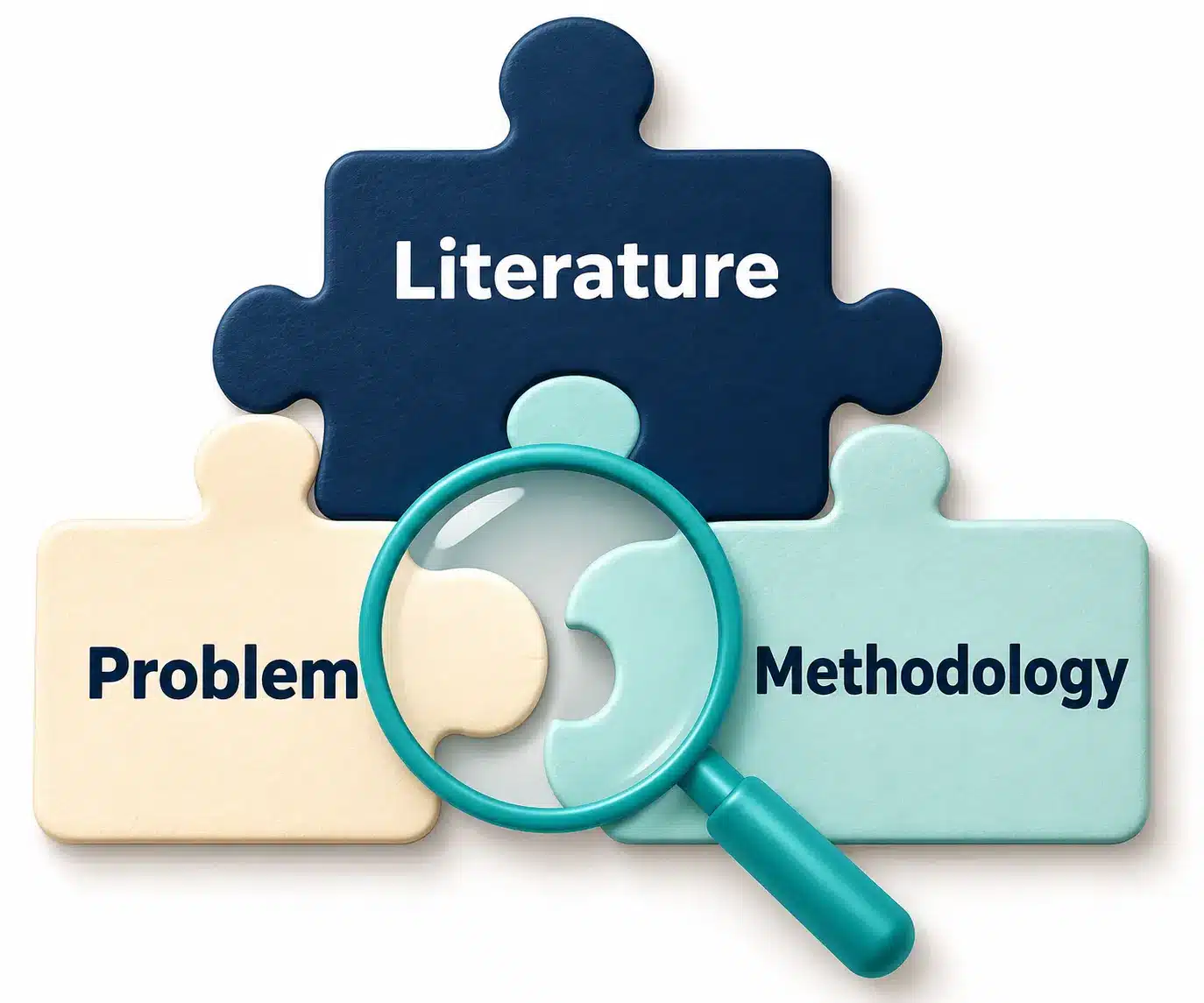
You need a stronger research gap, but you are unsure what evidence would establish it.
You have plenty of sources, but your literature review lacks synthesis and still reads like separate article summaries.
Your problem, purpose, and research questions seem aligned to you, but your committee sees misalignment.
You have described a research design as best you can, but still need help explaining why it fits.
Changes in Chapter 1 have created the need for major revisions throughout your proposal.
We help you review the proposal, identify those connections, and prioritize your revisions before you spend more time editing individual sections.
Comprehensive Chapter Guidance
Support for each chapter. Perspective on the whole proposal.
Whether it’s one troublesome section, a partial draft, or all three chapters, we tailor the support to your research, your feedback, and your program’s requirements.

Chapter 1: Justify Your Study
Your reader needs to understand the problem, what remains unknown, and how your study will address it. We help you examine your work and see where it needs stronger support.
- Distinguish the difference between generic problems and a justifiable research gap, and how best to defend it.
- Check alignment among your problem, purpose, research questions, and theoretical or conceptual framework.
- Evaluate whether your proposed scope fits your program, available time, and access to participants or data.

Chapter 2: Build an argument from the literature
When feedback asks for more depth and detail, our coaching helps you connect studies, examine their limitations, and explain what the literature means for your research.
- Refine your search strategy and evaluate the relevance and currency of the sources you select.
- Organize your review around themes, agreements, contradictions, and unanswered questions.
- Strengthen your synthesis and connect your framework and methodological choices to the literature.
Chapter 3: Create a feasible study
Selecting a methodology or design is only the beginning. Get guidance on the decisions and procedures you need to explain, justify, and understand before your study begins.
- Compare qualitative, quantitative, or mixed-methods options and how your methods influence study choices.
- Examine sampling, recruitment, sample-size justification, instruments, and practical access to data.
- Review whether your data collection and analysis plans answer your questions, with attention to rigor and participant protections.
Editing that preserves your voice
Where your university permits, our editors can help with clarity, organization, grammar, APA-style citations and references, and template formatting. Substantive research decisions and original academic content remain yours.
How We Work Together
Know what to address first, and why.
Tell us where you are stuck
Start with a free consultation about your proposal, committee feedback, and next deadline. You do not need a polished draft to start the conversation.
Agree on focused support
We discuss the guidance or editing that fits your needs and your university’s rules. Before paid services begin, you receive a clear scope, timeline, and quote. This way, pricing and work scope are transparent, and there are no surprises!
Work through your revision priorities
Depending on the agreed scope, support may include annotated feedback on your draft, a prioritized revision checklist, coaching on research decisions, and permitted editorial corrections.
The Optimum Difference
Work with people who understand the proposal stage.
Doctoral research expertise. Discuss your questions with PhD-level consultants and specialists in methodology, statistics, qualitative research, and academic editing.
Attention to your actual requirements. Your school’s template, rubric, and committee comments help guide our recommendations.
One-on-one attention. Talk through the reasoning behind recommended changes so you can explain your choices with greater confidence.
Established experience. Optimum has supported doctoral candidates nationwide since 2018, including students in online and traditional programs.
Academic Integrity & Authorship
Your research. Your decisions. Your authorship.
Our role is to support your learning through consultation, coaching, feedback, and permitted editing. We do not ghostwrite dissertations.
You conduct the research, develop the academic content, and take responsibility for your submission. We work within your institution’s rules for outside assistance, including any disclosure requirements.
Frequently Asked Questions
Questions you may have before reaching out
Can you help with just one chapter or a few committee comments?
Yes. Support can focus on one section, a specific methodological question, or feedback across Chapters 1-3. We also help you recognize when a change in one place affects another.
What if my chair has changed the direction of my study?
We can help you compare the new direction with your existing draft, identify material that may still be useful, and map the decisions that need attention. That gives you a clearer basis for revising and asking your chair focused questions. This will save you time and money.
Can you help with a DNP or other applied doctoral proposal?
Yes. We tailor guidance to the type of project your program requires. For an applied or practice-focused project, that may include discussing the practice problem, evidence-based intervention, PICOT question, measurable outcomes, and feasibility.
How much does proposal support cost?
The initial consultation is free. Paid support is quoted separately based on your draft, the complexity of the issues, and the agreed scope. We explain the cost and what is included before you commit, and the process is completely transparent.
Can you guarantee that my proposal will be approved?
Nobody can guarantee approval. Approval belongs to your university and committee. Our role is to help you understand feedback, strengthen your own work, and make informed research decisions at each step toward final approval.
Free Proposal Consultation
What is keeping your proposal from moving forward?
Tell us about the chapter, comment, or research decision you are struggling with. We will discuss where you are in the process and what kind of support may help.
Start with a free, no-obligation consultation.
Prefer to talk?
Call (984) 222-7122 or email info@optimumresearchconsulting.com.
Your initial consultation is free. Additional consulting and editing are paid services, quoted separately.
We treat your inquiry confidentially. Privacy Policy